John Ruskin (1819–1900), Was the Pre-Eminent Critic
A plaque at Ruskin Reserve, standing in Addington. The words below are the register’s own transcription, the casing, the spelling, the typos.
John Ruskin (1819–1900), was the pre-eminent critic of Victorian art and society. His philosophy stressed an extreme love of truth which prevailed over beauty, and through which, he saw the decline of art as a sign of general cultural crisis. In the face of the industrial revolution, his book 'Stones of Venice', (1853) was a warning to modern Britain. To Ruskin, the Gothic style possessed an inner moral quality that represented a finer, more upright society and means of production. It permitted freedom, individuality and spontaneity among workers, exposing the virtues of beauty and truth within nature and God. He compared the Gothic style to the Renaissance style of soulless factories of mechanical production and division of labour. These denied workers the spiritual element of creation by estranging the producer from the product of their hands, thereby enslaving the worker.
The register’s own frame
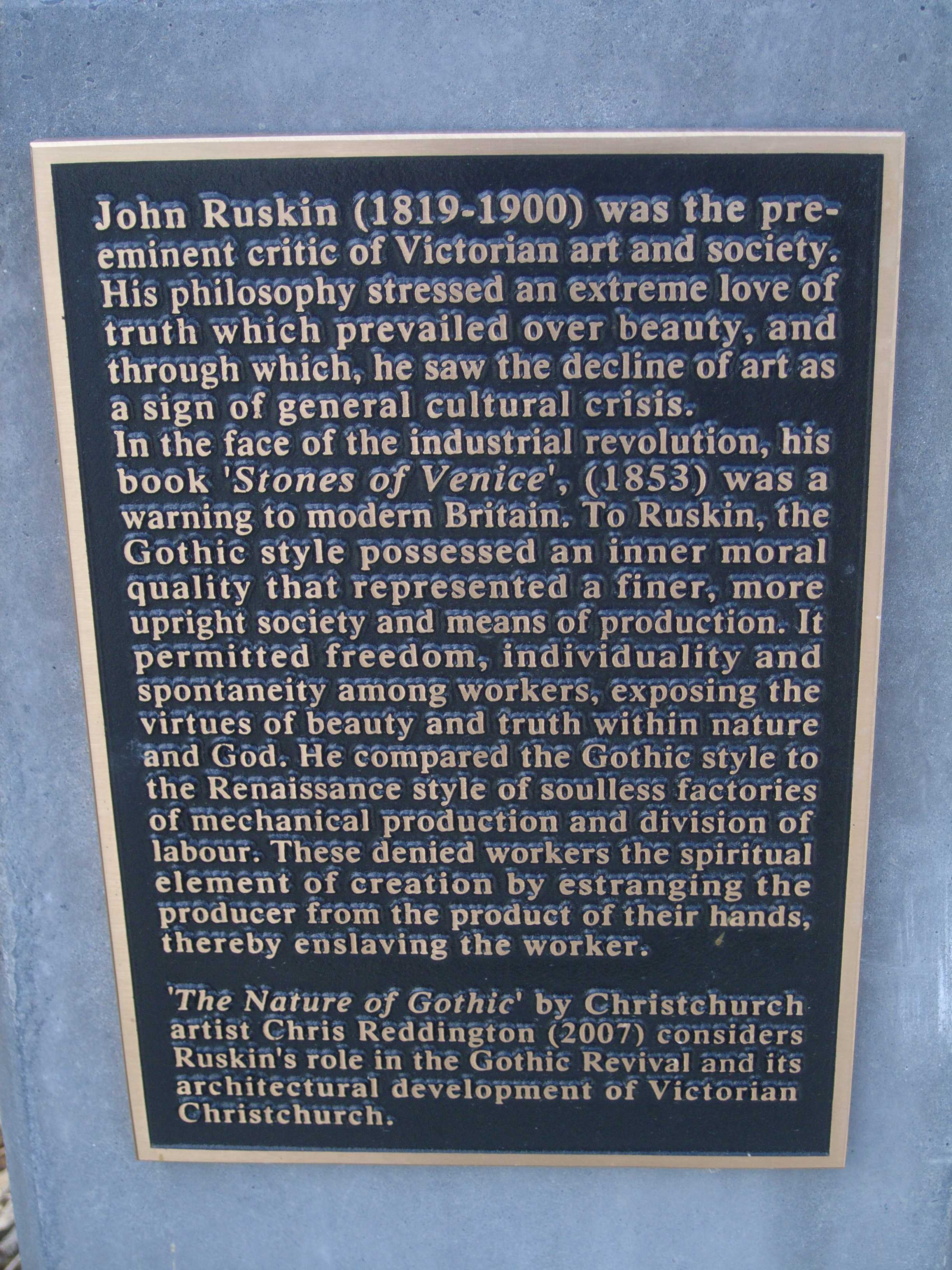
The council’s image, opened at its own host, the frame is the record’s, the reading is yours.
Where it stands
The record’s own pin; the strong outline is the suburb around it, the rest are its neighbours.
The ground’s other names
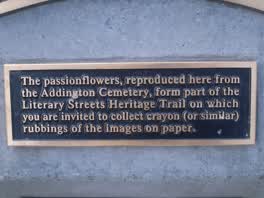 The Passionflowers, Reproduced Here From the Addington
 Ruskin Reserve plaque
 Rain Garden 8 Type III
In the archive
A name read off an inscription is a lead, not a verified identity, the search is where verification starts.
The ground under it
The plans and surveys kept here, asked once of the pin. The whole stack answers live: what stood on this ground →
Around it
The reports nearby
1,495 council reports pinned within 250 m of the point, most often Rubbish & dumping and Graffiti & vandalism, 1,145 with a photograph. A pin is where a reporter stood, not a claim about the place itself.
 Noise - Animal
 Hazard, vehicle
 Dumped Rubbish
 Dumped Rubbish
 Dumped Rubbish
 Graffiti on a fence, building or structure
 Graffiti on a fence, building or structure
 Graffiti on a sign, mural or public art
 Graffiti on a fence, building or structure
 Rubbish and Bins - General
 Hazard, vehicle
 Rubbish and Bins - General
Questions, answered briefly
A plaque of Christchurch, standing at Ruskin Reserve in Addington, one record on the council’s plaque register for the public estate.
The words above, verbatim, the surveyor’s transcription, casing, spelling and typos as they were read off the plaque. The register does not say who the name belonged to; the dedication is the whole of the record.
4 plaques on the register share this ground, the others are linked above.
The register marks it in service, commissioned 2008. The books' word, though, a plaque may have weathered since the survey, and the pin is the record’s position.
The record behind this
Christchurch City Council’s open data, the Furniture service’s Plaque layer. The inscription is the surveyor’s transcription; "In Service" is the books, not a promise the plaque still reads clean today. The pin is the record’s position on the layer.
This page as markdown: /plaque/31205-ruskin-reserve.md · the roll: /plaques · the record as data: /plaques.json · on the big map: /map?layer=plaques · the monuments the crowd mapped: /memorial · what stood on this ground before: /before.